Press play to unwrap the facts.
Scroll down to learn more about what diabetes is, what causes it and how to live a healthier lifestyle.






Diabetes is a chronic disease that occurs when the pancreas cannot produce insulin, or when the body cannot use the insulin that is produced.
Just as we store food, the body stores glucose in muscles, fat and the liver. When the body is unable to use/produce insulin, our body’s blood sugar levels become raised, and we run the risk of developing Hyperglycaemia. Hyperglycaemia can damage the vessels that supply blood to vital organs, which increases the risk of heart disease, stroke and kidney disease.
Diabetes affects more than 463 million people worldwide and is increasing, along with obesity. 40% of patients with heart failure also suffer from renal diseases.
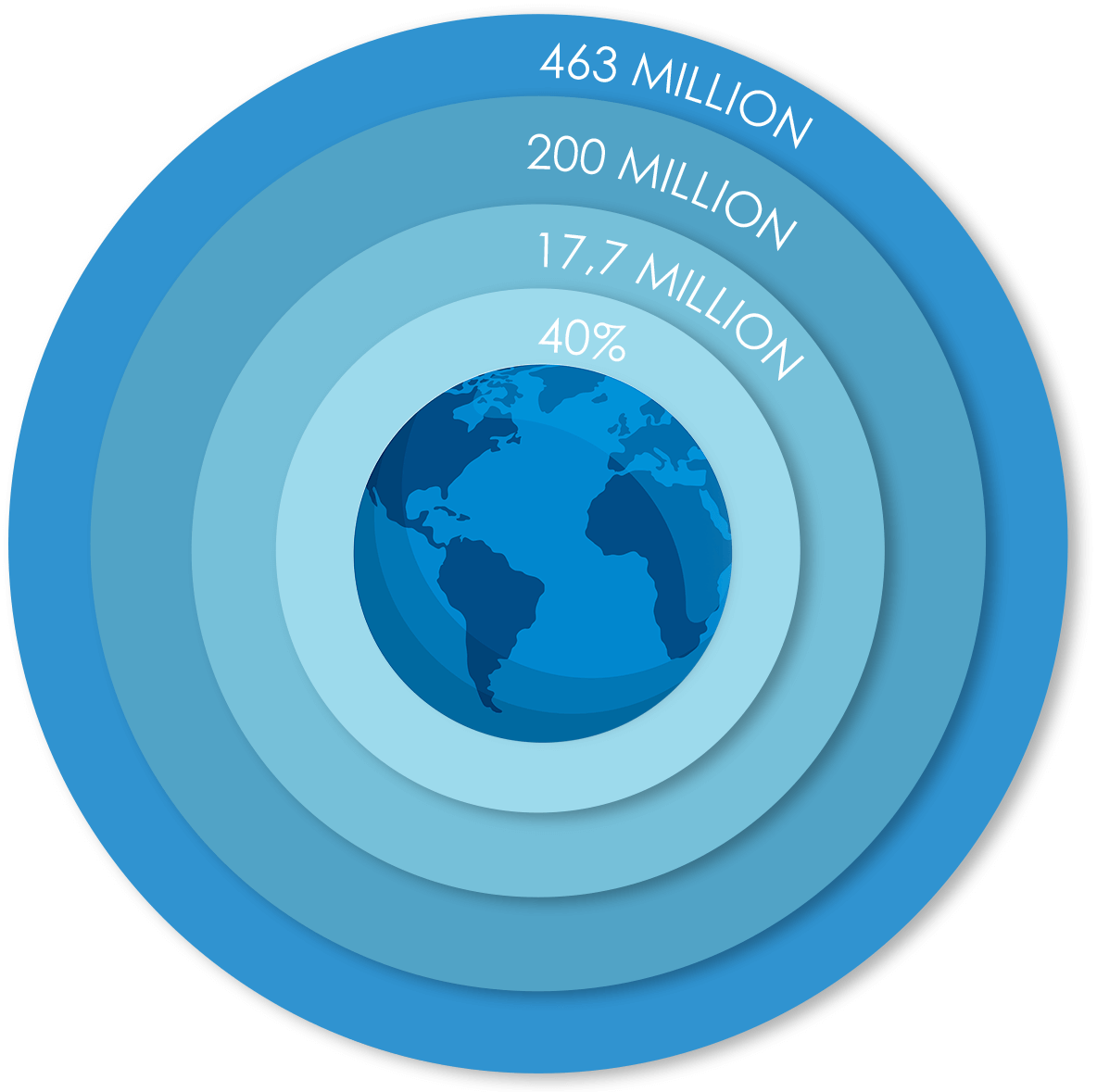
463 Million people live with DIABETES in the world
200 Million people with CHRONIC KIDNEY diseases in the world
17,7 Million deaths CARDIOVASCULAR diseases every year
40% of people with HEART FAILURE have RENAL DISEASES
Sources:
Diabetes is the body’s inability to use and/or produce insulin. Should this happen over a long period of time, our bodies will become hyperglycaemic, and run the risk of developing chronic heart and kidney failure, as well as other interconnected renal and metabolic diseases. There are two main types of diabetes that our bodies can suffer from – Type 1 and Type 2.
Read more, and educate yourself on the risks of diabetes and how to live a long and healthy life.
Diabetes can occur in anyone. However, people who have close relatives with the…

The diagnosis is made through a medical history, physical and laboratory…

The risk factors for type 1 diabetes are still being researched. However, having…

People with diabetes have an increased risk of developing a number of serious…

How is diabetes treated? Having diabetes need not mean the end of a normal,…

Diabetic nephropathy is the name given to kidney damage caused by diabetes. It…

Elevated blood sugar levels doubles the risk of cardiovascular disease.1 The…

In general, people with diabetes face increased risk of complications when it…
Upon receiving a diabetes diagnosis, there are several options available to help control the disease. Start by following a healthy food plan and getting some form of physical activity –start off slowly, but aim for at least 150 minutes per week.
Lifestyle changes can have an enormous impact on treating and managing diabetes, and often, a conscientious approach to a healthy lifestyle can allow people suffering from diabetes to prevent any further complications from arising.

According to the American, Canadian and South African Diabetes guidelines, both…

According to the American, Canadian and South African Diabetes guidelines, both…
Join us as we unpack the topic of diabetes and benefits of exercise in diabetes…

A healthy diet is not only critical to proper diabetes management but will also…

Keeping the right foods in your kitchen when you have diabetes is an important…
Manifestations of Type 2 diabetes may not be obvious, or there may be no signs at all, so it can take up to 10 years before you find out about them. That is why it is very important to know the risk factors.
You have an increased risk of Type 2 diabetes if you are overweight or obese, if you have a sibling or parent with diabetes, or if you are over 40 years of age. You have more risk if you are sedentary and lack physical activity.
Diabetes can occur in anyone. However, people who have close relatives with the…
The diagnosis is made through a medical history, physical and laboratory…
Elevated blood sugar levels doubles the risk of cardiovascular disease.1 The…
In general, people with diabetes face increased risk of complications when it…
The risk factors for type 1 diabetes are still being researched. However, having…
Diabetic nephropathy is the name given to kidney damage caused by diabetes. It…
How is diabetes treated? Having diabetes need not mean the end of a normal,…
People with diabetes have an increased risk of developing a number of serious…