






what is blood pressure?

Blood Pressure Icon

what is blood pressure?

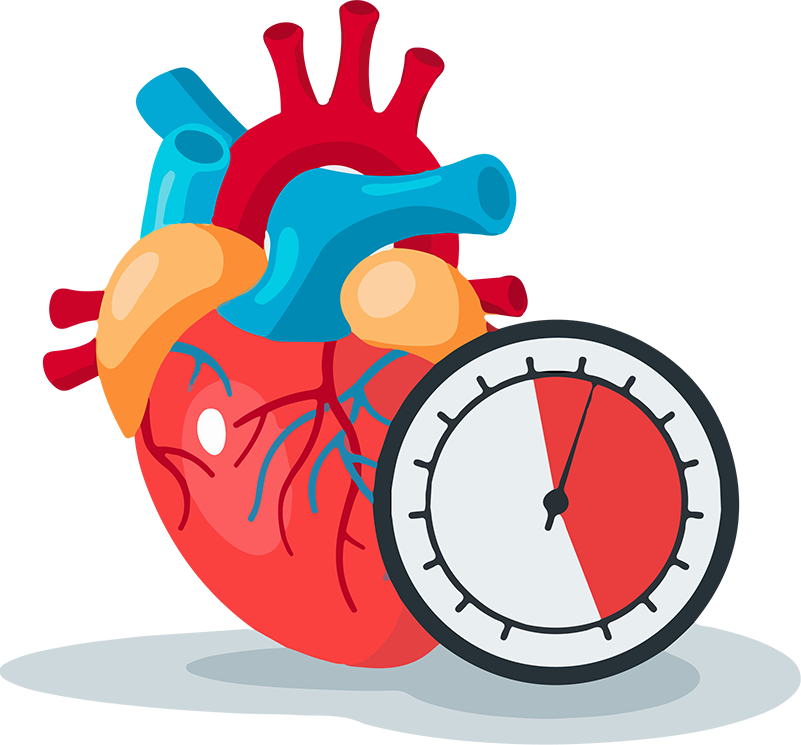
Blood Pressure is the force exerted by circulating blood against the walls of the body’s arteries1, the major blood vessels in the body. An artery is a blood vessel that carries blood from the heart to tissues and organs in the body2.

Although it is normal for Blood Pressure to vary slightly throughout the day, your Blood Pressure should basically be stable3.

blood-pressure-icon.png

gauge icon How
heart icon What
drop icon SYMPTOMS
Meter
Gauge Icon

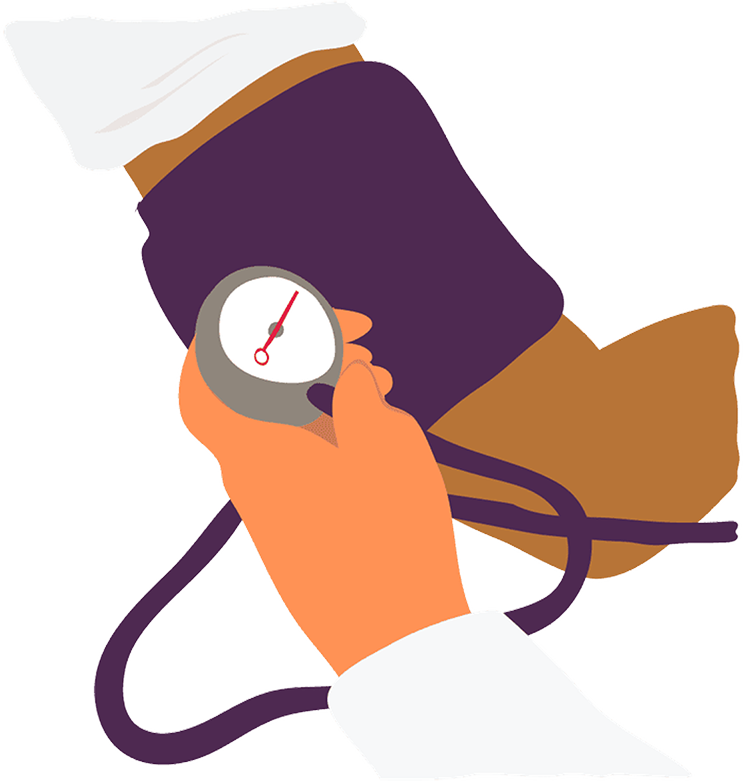
How is Blood Pressure Measured?

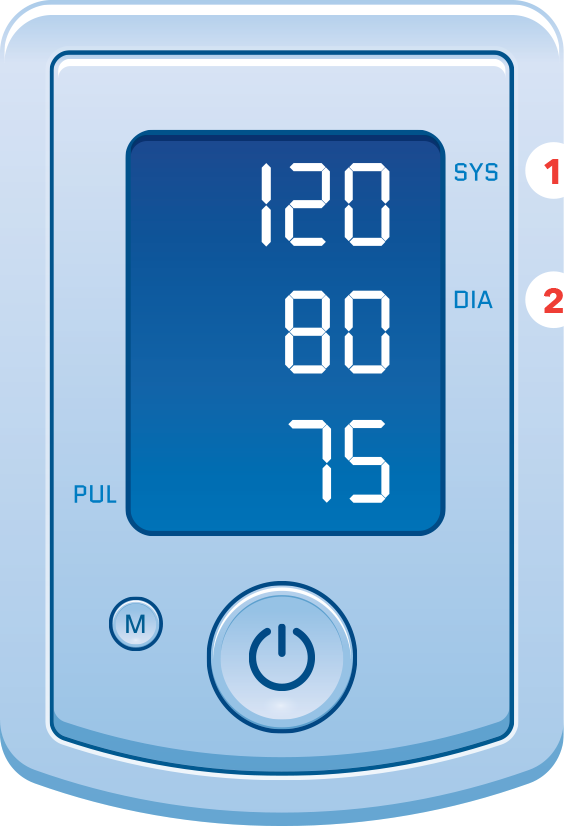
Blood Pressure is written as two numbers1:

  1. The first (systolic) Blood Pressure represents the pressure in your arteries when your heart contracts or beats1.
  2. The second (diastolic) Blood Pressure represents the pressure in your arteries when your heart rests between beats1.

The normal values for Blood Pressure are less than 120 (systolic) and less than 80 (diastolic) mmHg4.

Gauge Icon
Meter

mmHg - The abbreviation mmHg means millimetres of mercury5. Mercury was used in the first accurate pressure gauges and is still used in medicine today as the standard unit of measurement for pressure5.

REFERENCES:
1. World Health Organization (WHO). Hypertension. Aug 25, 2021. Accessed Apr 1, 2022. Available from https://www.who.int/news-room/fact-sheets/detail/hypertension
2. National Cancer Institute. Dictionary of cancer terms. Artery. Accessed Apr 1, 2022. Available from https://www.cancer.gov/publications/dictionaries/cancer-terms/def/artery
3. Berry J. How can I stabilise my Blood Pressure? May 23, 2021. Accessed Apr 1, 2022. Available from https://www.medicalnewstoday.com/articles/321523
4. Rayner B, Jones E, Veriava Y, et al. South African Hypertension Society commentary on the American College of Cardiology/American Heart Association hypertension guidelines. Cardiovascular J Africa 2019;30:184-187
5. American Heart Association (AHA). Understanding Blood Pressure readings. Accessed Apr 1, 2022. Available from https://www.heart.org/en/health-topics/high-blood-pressure/understanding-blood-pressure-readings

RISK FACTORS FOR HIGH BLOOD PRESSURE

The following factors may contribute to having High Blood Pressure1:

  1. Having Type 2 Diabetes, kidney disease, or a family history of hypertension.
Read more

What are the risks of high blood pressure?

High Blood Pressure can harden arteries, decreasing the flow of blood and oxygen to the heart1. The elevated pressure and reduced blood flow can cause1...

Read more

Take our risk checker

A helpful tool in making an early diagnosis of conditions such as High Blood Pressure which can impact your heart and kidneys. Early diagnosis means better management.
Use the risk checker today.

PREVENTION AND MANAGEMENT OF HIGH BLOOD PRESSURE

Hypertension can be prevented and managed by following a healthy lifestyle1;2:

  • Reduce salt intake to less than 5g daily
  • Eat more fruits and vegetables
  • Limit the intake of foods high in saturated fats
Read more

Limiting salt intake when having High Blood Pressure

Meet our expert, registered Dietician with special interest in diabetes, Chrystal Slater, as she tackles diabetes therapy and lifestyle education with her patients.

She is well aware of the modern-day challenges presented to patients every day, so to make her approach aspirational, she accesses individual lifestyles in order to collate information to create a plan that helps with managing lifestyle and weight goals.

Read more

CHRONIC KIDNEY DISEASE

Kidney Disease

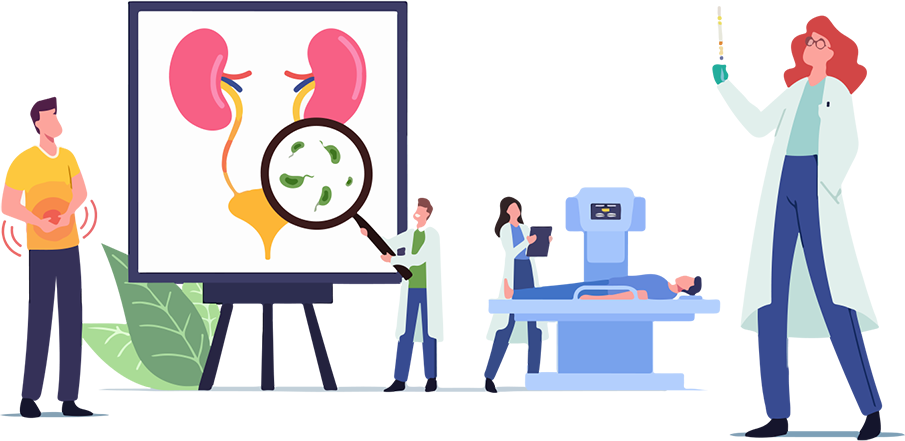
The primary role of the kidneys is to filter blood to remove waste and excess water from the body. Half a cup of blood is filtered every minute to make urine.

In Chronic Kidney Disease (CKD), the kidney function declines over time.

Read more
Kidney Disease

Related Articles

Risk Factors that can contribute to having high blood pressure

THE FOLLOWING FACTORS MAY CONTRIBUTE TO HAVING HIGH BLOOD PRESSURE:

What are the risks of having high blood pressure

Prevention of high blood pressure

Hypertension can be prevented by following a healthy lifestyle

Accept

We use cookies to improve your experience on our website. By using our site, you agree to our cookies policy.